How to Create a Haunted House at Home: Layout, Lighting, Sound and Safety
A ten-step plan for building a home haunted house, from mapping a one-way route to lighting, sound, scares and the safety walk-through.
You do not need a barn, a budget or a team of actors to build a haunted house people talk about. You need a clear route, controlled lighting, sound and two or three well-timed surprises. This guide takes you from blank garage to opening night, with safety built in at each step.
The plan in brief
- Decide who it is for and how scary it should be.
- Choose one theme.
- Map a one-way route with three to five scenes.
- Build simple walls, then add lighting and sound.
- Place a small number of strong scares.
- Walk it with the lights on and fix every hazard before anyone else goes in.
1. Decide your audience and scare level
A haunt for seven-year-olds and a haunt for teenagers are different projects. Pick one, or plan two modes: a lights-up, no-jump version early in the evening and a darker version later. Our guide to scare levels describes what each tier involves.
2. Choose a single theme
A theme tells you what to build and, just as usefully, what to leave out. Abandoned farmhouse, haunted mill, mad laboratory, cursed carnival, overgrown graveyard: any of them works. A consistent theme makes inexpensive props look deliberate.
3. Map the route
Sketch your space and draw one path through it.
- One direction. Visitors enter at one point and leave at another, so groups never meet head-on.
- Three to five scenes. A short, well-finished route beats a long, thin one.
- Turns. Corners hide what comes next and make a small space feel bigger.
- Width. Keep the path wide enough for an adult to walk comfortably and to turn around.
- Exits. Know how someone gets out quickly from every scene, and never block a door.
Garages, carports, side yards and covered patios all work. Indoor hallways are possible but leave you less room for exits.
4. Build the walls and scenes
Temporary walls turn an open room into corridors. Common approaches include black plastic sheeting or fabric hung from the ceiling or from a simple frame, freestanding panels made from wood or sturdy cardboard, and existing shelving draped in cloth.
- Choose flame-retardant materials where you can, and keep all sheeting and fabric away from lights, heaters and fog machine nozzles.
- Make sure every wall is stable. A panel that falls over is a real hazard in the dark.
- Dress each scene with a few large items instead of many small ones. Detail is lost in low light.
5. Light it
Aim for dark but navigable. Visitors should be able to see the floor ahead of them, even if they cannot see the walls.
- Use hidden, coloured LED lights low to the ground.
- Give each scene a different colour or intensity, so walking through feels like a journey.
- Always light steps, thresholds and any change in floor level.
- Avoid complete blackout unless the floor is flat, clear and familiar to you.
- Use strobes sparingly and warn visitors at the entrance.
Colour and placement ideas are in our Halloween lighting guide.
6. Add sound
Sound fills the gaps between scares. A low ambient track, such as wind, creaking wood or a distant heartbeat, makes people uneasy before anything happens. Hide a small speaker in each zone and keep the volume moderate, so the occasional loud effect has room to land.
7. Design the scares
The most reliable scare is misdirection: draw attention one way, then act from another.
- Place something eye-catching ahead, and trigger the scare from the side.
- Follow a quiet stretch with a sudden change, not a constant barrage.
- Use an animatronic or a hidden helper for one or two key moments.
- If people are acting, agree on firm rules: no touching, no blocking the path, and stop at once if a visitor says stop.
8. Fog and special effects
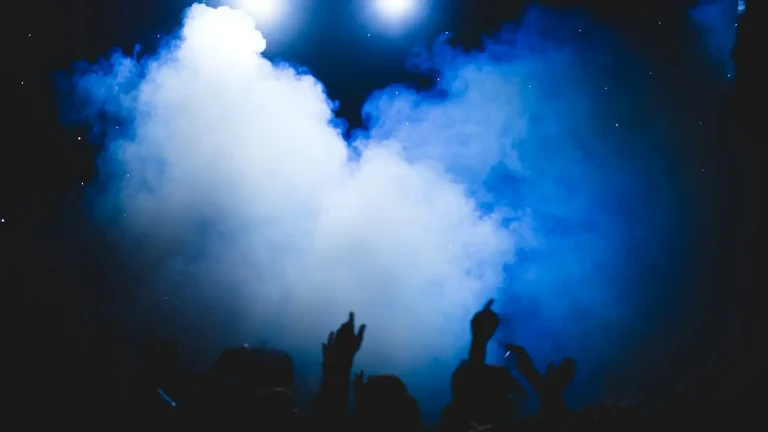
A little fog adds depth and makes light beams visible. Indoors, use short bursts, ventilate and remember that fog can set off smoke alarms. Never disable an alarm to run a haunt. See fog machines vs. low-lying fog for the options.
9. Safety walk-through
Before anyone else enters, walk the whole route with the main lights on, then again in show lighting.
- No open flames anywhere. Use battery candles only.
- Every exit is clear, unlocked and known to all helpers.
- Cords are taped down or routed overhead, and nothing is plugged into an overloaded strip.
- Walls and props are stable and nothing sharp is at head or eye height.
- A fire extinguisher and a flashlight are within reach.
- A responsible adult is present whenever the haunt is open.
- Everyone knows the phrase that stops the show and brings the lights up.
10. Run the night
- Have a greeter explain the rules: walk, do not touch, and say “lights on” if you want out.
- Send small groups through with a gap between them, so scares can reset.
- Offer a gentler pass for young children, with lights up and helpers waving.
- Take breaks. Helpers get tired, and tired helpers make mistakes.
Where to spend and where to save
| Element | Priority | Why |
|---|---|---|
| Lighting | High | Sets the mood of every scene and is reusable each year. |
| Sound | High | Low cost for a large effect. A phone and a small speaker are enough. |
| One feature prop | Medium | Gives the haunt a memorable moment. |
| Wall materials | Medium | Needed for the route, but simple materials work. |
| Small props and set dressing | Low | Easy to make or borrow, and barely visible in the dark. |
For a full spending plan, read how to build a Halloween setup on a budget or try the Halloween Budget Calculator.
Frequently asked questions
How long should a home haunted house take to walk through?
Two to five minutes is plenty for a garage or yard haunt. A short route with strong scenes is more effective than a long one with gaps.
How many scares do I need?
Two or three good ones. Atmosphere from lighting and sound should carry the rest.
Do I need a permit for a home haunted house?
A private party for friends and neighbours usually does not, but rules vary. If you plan to open to the public or charge admission, contact your local fire or building department first, because safety requirements can apply.
How do I make it less scary for little kids?
Raise the lights, lower the sound, skip jump scares and let children see that the monsters are friendly people in costume.