Best Halloween Lighting for a Spooky Outdoor Display: A Guide by Type
Floodlights, string lights, projectors, black lights and flameless candles: what each does best, which colours to use and how to power them safely.
Affiliate disclosure: This guide contains links to Amazon. As an Amazon Associate we earn from qualifying purchases, at no extra cost to you. Recommendations are based on research, not hands-on testing, unless we say otherwise. How this works
Lighting does more for a Halloween display than any single prop. A plain plastic skeleton lit from below in green looks sinister. An expensive animatronic in the dark looks like nothing at all. This guide covers the main types of outdoor Halloween lighting, where each works best and how to power them safely.
Quick answer
- Start with one or two coloured LED floodlights aimed up at the house or main props.
- Add string lights to outline a porch, fence or path.
- Use flameless candles in pumpkins and lanterns.
- Keep the walking route lit, even if the rest is dark.
- Outdoors, use outdoor-rated products on a GFCI-protected outlet.
Types of Halloween lighting
| Type | Best use | Look for | Watch out for |
|---|---|---|---|
| LED floodlights and spotlights | Washing a wall, tree or large prop in colour | Outdoor rating, colour choice or RGB remote, ground stake | Glare into visitors’ eyes or neighbours’ windows |
| String lights | Outlining porches, railings, fences and paths | Outdoor rating, LED bulbs, end-to-end connectors | Connecting more strings than the maker allows |
| Light projectors | Moving patterns across a house front | Outdoor rating, coverage distance, timer | Washed out by street lights or other fixtures |
| Window projection | Animated scenes inside a window | A projector, a rear-projection screen material and a dark room | More setup than most decorations |
| Path and stake lights | Marking the safe route | Solar or low-voltage, steady light | Dim solar lights after cloudy days |
| Flameless candles and lanterns | Pumpkins, windowsills, steps | Flicker effect, timer, battery life | Cheap units that are too dim outdoors |
| Black lights (UV) | Making fluorescent paint and props glow | True UV LED fixtures | Weak effect in open, lit areas |
| Strobe lights | Short, intense moments | Adjustable speed | Can affect people with photosensitive conditions. Use sparingly and post a warning. |
Choosing colours
- Green reads as sickly and unnatural. Good on skeletons, walls and fog.
- Purple feels otherworldly and flatters almost any prop.
- Blue suggests moonlight and makes a scene feel cold.
- Red is dramatic but flattens detail. Use it as an accent.
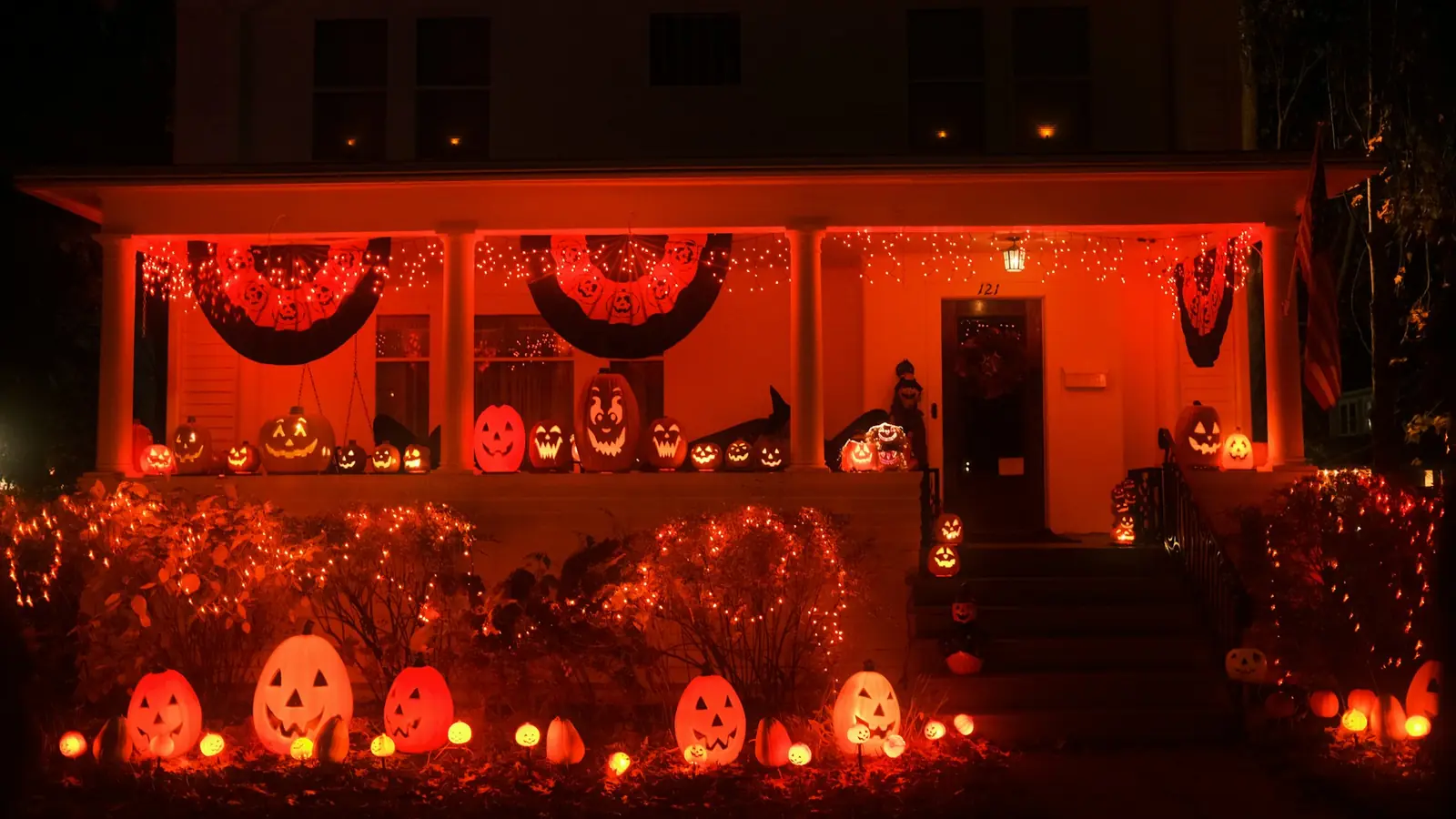
- Orange and amber are warm and welcoming, ideal for family displays and entrances.
Limit yourself to two or three colours. A display lit in every colour at once loses its mood.
Five placement principles
- Light from below. Uplighting reverses the shadows on a face or figure, which the eye reads as unsettling.
- Hide the source. Tuck fixtures behind tombstones, shrubs or props so visitors see the glow, not the lamp.
- Layer it. A wash of colour for the background, brighter accents on key props, and steady light on the path.
- Leave darkness. Shadows are part of the design. Light the things you want seen and let the rest fall away.
- Backlight fog. Fog is nearly invisible unless light passes through it. See fog machines vs. low-lying fog.
Power and weather safety
LED lighting draws little power, which makes it easy to run a large display from one circuit. The risks come from water and from tired equipment.
- Use only lights and cords marked for outdoor use, and certified by a recognised testing laboratory.
- Plug into a GFCI-protected outlet.
- Inspect every cord before use and discard any that are cracked or frayed.
- Keep plugs and connections off the ground and out of puddles.
- Do not connect more light strings end to end than the manufacturer allows.
- Route cords away from walkways, or cover them, so nobody trips.
- Put the display on a timer and turn it off when you go to bed or leave home.
- Keep dried cornstalks, hay bales and fabric away from any bulb that gets warm.
Product listings often quote an IP rating. As a rough guide, IP44 means protected against splashing water, and IP65 means protected against water jets, which is better for fixtures fully exposed to rain. For anchoring and cord protection, see our weatherproofing guide.
What to buy
Frequently asked questions
What colour light is best for Halloween?
Green and purple give the most recognisably eerie look. Orange is warmer and suits family-friendly displays. Two or three colours together work better than many.
Are LED lights better than incandescent for outdoor displays?
For most displays, yes. LEDs use far less power and run cooler, which reduces load on the circuit and the risk of heat near decorations.
Do I need a special outlet for outdoor lights?
Outdoor lighting should be plugged into a GFCI-protected outlet, which cuts power quickly if it detects a fault. A portable GFCI adapter is an option if your outlet is not protected.
How do I light a display without annoying the neighbours?
Aim fixtures at your own house or props, shield them from the street, avoid strobes, and use a timer so everything switches off at a reasonable hour.
Sources and further reading
- U.S. Consumer Product Safety Commission: Halloween safety tips for costumes and decor
- Electrical safety points reflect widely published guidance from electrical safety organisations: use certified outdoor-rated products, GFCI protection, undamaged cords and timers.